Promising Beginnings: The Settling of Lynwood
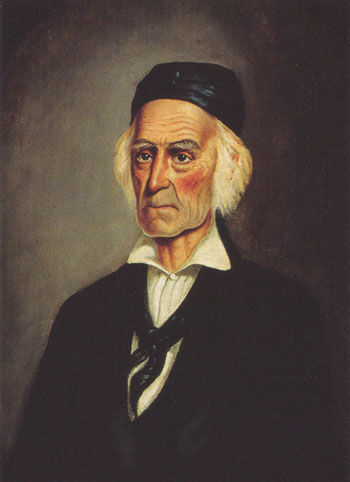
It all started with Don Antonio Maria Lugo. Through a series of twists and turns, Lugo found himself with a patent from the US Government granting him nearly thirty thousand acres of land. The region would come to be called Rancho San Antonio and today is made up of numerous modern cities including Bell, Bell Gardens, Lynwood, Maywood, South Gate and others.
As the land owner neared his death, he divvied up chunks of land among his children. Guadalupe Lugo, one of his three daughters, would eventually inherit the lands inclusive of present-day Lynwood. After several turns of ownership, the lands of Lynwood came into the possession of Jonathon Slauson, who after working as an attorney in New York made his way west and became a large scale land developer. Modern-day Slauson Avenue is named in his honor.
Slauson would go on to sell the land now known as Lynwood to a cohort of investors including Charles H. Sessions in 1885. Sessions opted to name the city and his anchor business tenant dairy after his wife, Lynn Wood Sessions. In the 1880s and beyond, numerous listings can be found in publications like the now-defunct Los Angeles Herald, calling out to settlers pouring into the western region. One of the earliest families to settle in Lynwood was The Abbotts, whose home built near the present-day intersection of Wright Road and Martin Luther King Jr. Boulevard would stand in place until the early 2000s when it was relocated to a new location on Atlantic Avenue. In 1895, the Lugo District School opened setting off the formation of the primary education backbone in the area.
When Sessions wasn’t tending to matters related to city-building, his work at The Lynwood Dairy kept him civically engaged as he produced award winning butter that won prizes at annual fairs. Eventually, Sessions would come under some degree of fire in 1907 when health officials found abysmal conditions at The Lynwood Dairy and other poorly sanitized dairies throughout the region. In addition to milk, Sessions also raised hogs.
Looking to spur development, Sessions would in 1913 join H.T. Kaufin, E.C. Lewis and Kingsbury Sanborn in the formation of the Lynwood Company. The group would organize trips on double decker buses for prospective homeowners to visit the area in hopes of selling suburban home lots for between $500 and $800. These visitors would often be treated to a free lunch and wooed with the prospect of free water. But despite the company’s early efforts, World War I among other things would keep growth modest until after the war ended. The Lynwood Company would close its doors in 1918, giving way to the Lynwood Bank.
Nonetheless, the community continued to build. An almost non-stop array of advertisements would populate papers like the Los Angeles Herald and Los Angeles Times in promotion of lots of land with or without single family homes already constructed. One noteworthy ad in 1917 referred to Lynwood as “the PLACE that’s MAKING GOOD. Overall optimism remained high as improvements related to plumbing and lighting and traffic signals were underway, with a constant stream of activity on thoroughfares like Long Beach Boulevard. Before long, the city would also field a rather competitive semi-pro baseball team that competed with other squads from across the region.
In spite of several decades worth of settlement activity, Lynwood was not yet a city. That didn’t happen until Lynwood residents voted 5 to 1 in an election to formally incorporate. At the time of incorporation, Lynwood was home to roughly 800 residents; a majority of them farmers. One of the first orders of business was the installation of a proper sewer system. As an official Los Angeles County member city, the Los Angeles County Sanitation District would deploy resources over the next decade to begin digging and installing sewer lines. In parallel, the city’s residents would begin to set their sights on formalizing governmental operations by doing things like authorizing financing for the city’s first official City Hall, establishing a police station and a courthouse.
The Tribune emerged as the city’s newspaper in March 1922. The paper stuck with the early city line by boasting about the “oodles and oodles of water of the purest and most wholesome kind” that Lynwood used to entice new residents. However, when there wasn’t extensive boasting being done, the paper also worked to track the almost mind-boggling amount of resignations and other forms of turnover for the city’s earliest governing body. Recalls quickly became a means by which Lynwood citizens would hold their elected officials accountable. As was the case when Addie Kimball, the first woman elected in Lynwood, was recalled in 1931; the same year she was elected.
One of Lynwood’s most appealing attributes was certainly the city’s train station. Pacific Electric set out about laying tracks connecting Los Angeles to Santa Ana in 1905, which netted Lynwood its very first train depot. This allowed early residents to move about freely conducting personal and professional business. However subdivisions of land that were not serviced by rail would find it difficult to thrive, resulting in clustering near areas which had greater access to transit.
But over time the Southern California region would find itself being increasingly invaded by “horseless carriages.” As interest in these early automobiles took hold, regional leaders - white men of wealth - came together to form the Automobile Club of Southern California. These individuals worked to “promote laws and highway projects that were beneficial to the automobile, and to promote growth and tourism in Southern California.” In parallel, the city aggressively set out about executing new land acquisitions and improvement projects on thoroughfares like Century Boulevard and Imperial Highway.
And to be clear, the early advocacy was needed given the absence of adequate infrastructure and norms around driving. In fact, many early articles covering Lynwood speak of collisions between automobiles and automobiles, automobiles and pedestrians, and, of course, automobiles and trains. Many of these collisions resulted in death. The tension between existing modes of transit and the new automobiles began to build steadily.
On Track for Growth: Development in Lynwood
As Lynwood began its journey to modernize from just an agrarian economy, the continued allocation of large plots of land for agrarian purposes became less feasible. Suburban realities meant greater density and greater access to job opportunities. Lynwood boasted a blend of access to Los Angeles as well as its own native set of employment opportunities. Companies like Western Gear Works, Grayson Controls and Jorgensen Steel Company cropped up, replacing farms with manufacturing. Wright Road in particular would establish itself as a major industrial corridor in the city.
The city would survive a 1930s earthquake that brought it and other cities in the region to their knees. Rebuilding with the prospect of further shaking in mind, many supermarkets, theaters and other retail outlets would continue to pop up.
In the 1940s, which by some accounts was the manufacturing and industrial heyday of the city, tires, automobiles and steel helped to drive job growth. In My Blue Heaven, Becky Nicolaides speaks to the federal government’s role in shaping the region’s burgeoning prosperity during World War II. As a result of lucrative war contracts, “Southern California grew four times faster than the rest of the nation.”
Wonderful post. Many similarities to our city.
ReplyDelete