The Judge and His Decree: The Outsized Influence of Judge Harry Pregerson
There is also a danger that vacant buildings, exposed utility lines, and similar by-products of the right-of-way acquisition process will become threats to the public health and safety during the period in which this preliminary injunction remains in effect. Therefore the Division of Highways will remain free, for good cause shown, to engage in such demolition or other work that is necessary to protect the public health and safety.
On March 4th, 1970, Esther Keith’s decided to lock her front door and prevent Department of Highways right-of-way agents from entering. Over time, this would come to be identified as the opening salvo between the plaintiffs and those working to build the Century Freeway. For the better part of a decade, the freeway corridor would sit frozen in time as an open wound incapable of healing; with incisions so deep that it was visually obvious that freeway completion was a foregone conclusion.
As would be noted in the final Environmental Impact Statement submitted years later:
“The project has progressed to the point where its impact is very evident; physically in the corridor. Over 70% of the right-of-way has been acquired; substantial tracts of vacant land exist where buildings have been cleared, 45% of property in all. A number of community facilities, including one park and three elementary schools, have been acquired, and their relocations or replacements are in progress. About 1600 dwelling units remain standing, but are vacant and boarded-up.”
Nonetheless, the Keith family came together with several other corridor families, the newly formed Center for Law in The Public Interest, NAACP, Sierra Club, Environmental Defense Fund, Freeway Fighters and City of Hawthorne to file suit seeking to block further development of the freeway. To the plaintiffs, it was important to block any further demolishment of homes, as a continuation would make the freeway’s construction a fait accompli. Just in the nick of time, Judge Harry Pregerson would rule in the plaintiffs’ favor and issue an injunction that prevented further home clearance and required additional work related to environmental impact and housing for the displaced.
Efforts to come into compliance with Judge Pregerson’s injunction proved to be slow moving. It wouldn’t be until December 1974 that a draft EIS would be prevented. At this point, corridor deterioration had already started to take hold.
A Renegade Judge
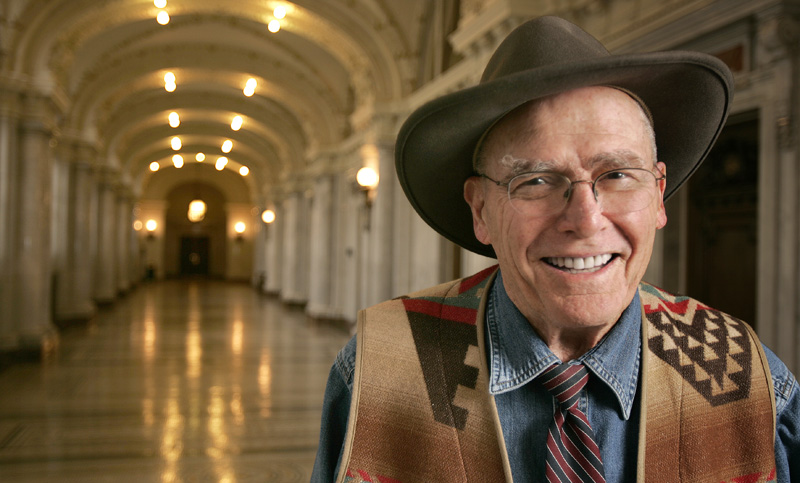
To say that Judge Harry Pregerson thought highly of his own work would be an understatement. Yet, it’s not easy to determine how to appropriately assign blame and/or credit given the sheer scale of the Century Freeway saga and the number of individuals, agencies and other organizations that game together to make this the project cost more than those that conceived of the highway could have ever imagined.
He immediately identified the complexities that were being brought to light by the Keith lawsuit. “What am I going to do?” he asks. “I’ve got these people who don’t get along with each other...and they’re hurting the project.”
By Pregerson’s estimation, nearly 13,000 affordable dwelling units cropped up across the region in the years that followed construction of the Century. One such project was Cochran Villas, which was sponsored by none other than Johnnie Cochran. Yet, while the Judge places heavy emphasis on his accomplishments related to affordable housing and the awarding of freeway contracts to minorities and women, he doesn’t make much reference to the community deterioration that occurred while the project was enjoined.
The original Consent Decree was established in 1979. In 1981, it was further amended to provide for a total of 6 lanes, 2 HOV lanes, a transitway for rapid transport, 10 transit stations, 10 interchanges and ramp metering. Viewed in its entirety, the finished product surely seemed to earn the Judge those “New Deal liberal” tags that were often thrown his way. Thanks to the Judge’s unwavering desire to do good, what resulted was an alphabet soup of organizations with an unclear hierarchy that lead to an almost comical amount of confusion and conflict.
If not for the pressures being applied as a result of the severe blight that was accumulating throughout the corridor cities and communities, it is unclear if the Judge and the multitude of stakeholders might have concocted a more orderly, structured and well-defined means for accomplishing all of the goals set forth in the consent decree. But as the “frozen in time” facade had shown itself to have worn off after nearly a decade of deterioration, it was clearly time for Judge Pregerson to put things back on a path that ensured a pathway towards constructions while addressing - in most cases indirectly - the original concerns of the plaintiffs. Unfortunately, the original case had in no way kept pace with the problems that began to compound as the State and Feds tried to fumble their way through getting the Century built.
Housing Replenishment
The availability of housing that would allow corridor neighborhoods to ingest displaced residents became a sticking point very early on in the life of the Century Freeway. Home ownership being central to the identity of so many throughout the region, fueled negative responses to the prospects of having “renters” and “transients” flood in neighborhoods that were previously not accessible to them.
In largely Black neighborhoods like Baldwin Hills and Windsor Hills, the opposition was especially strong. Local homeowners were adamant in their assertions that they would “not allow the ghetto to be dragged up into these hills.” A State housing official would observe that while some opposition to ingestion of displaced residents was overtly racist, much of it took on the form of “income prejudice”; in this case more affluent Blacks behaving in a prejudiced manner against less affluent Blacks.
While being confronted with vehement pushback from residents of more attractive neighborhoods, displacees were also not very high on the prospects of moving into units being developed in crime-ridden areas such as Lynwood, Watts and Compton. Logistical chaos attributable to the State’s inefficient management of dwellings acquired in Lynwood also compounded the problem of potentially choice residents seeking housing elsewhere.
Despite the State having acquired 67% of the necessary dwellings in Lynwood, an agreement under which the State committed to prioritize renting to original property owners and returning 24% of rent receipts to the City, the program had only netted a woefully low $41 for the City.
Many housing-related issues loomed in advance of the consent decree. But with all of the hopes for replenishment associated with ongoings in the corridor, it is surprising to note that by 1983 the Century Freeway Housing Program specifically had appointed 4 executive directors and only 40 units had been constructed.
Even when new projects were pursued that would have likely helped to create relief for displaced corridor residents, opposition to low-income housing was not uncommon. In fact, there were even instances of affluent black homeowners working to block a 70-unit development in the View Park, Windsor Hills and Baldwin Hills areas. Residents noted that allowing the project to move forward would decrease home values and increase crime rates. Those same sentiments from the 1970s carried through into the 1980s as residents feared any developments that would compromise the value of their property.
“If they are allowed to build that project, it would certainly detract from the neighborhood and potential buyers would not be willing to invest in this area,” one homeowner said. Another added that residents were “not opposed to low-income housing” but “it is a fragile balance that would take very little to tip over.”
More than 6 years into the housing program, cost overruns were the norm. The state essentially had a target on its back allowing for opportunistic stakeholders to make a financial killing. And even after units were built, there was difficulty getting families moved in. A Los Angeles Times article in 1987 noted that while roughly 1000 replenishment units had been built, between 30-40% of them sat vacant due to miscellaneous onboarding issues.
A bit of three years after the completion of the freeway, Century Housing Corp would begin to pursue projects beyond the originally mandated 12 mile zone (6 miles out on each side of the freeway). With thousands of affordable housing units already built and Judge Pregerson’s blessing, the organization would begin pursuing projects outside of the corridor and would begin placing greater emphasis on financial returns than on community stabilization.

Affirmative Action
Affirmative action elements in the consent decree were lauded by some, but proved hard to enforce after the consent decree had gone into effect leading to only modest results. The Century Freeway Affirmative Action Committee worked to play watchdog over CalTrans and the agency’s contract awarding process. The committee would at times point out contracts that it felt violated the spirit of the consent decree. Such was the case when CFAAC noted that a $53 million contract awarded marked the sixth time that CalTrans had awarded a contract over its objections. But as Anne Hickambottom, head of CFAAC noted, “we can only go so far because CalTrans has final authority and that’s written into the consent decree.”
In 1991, black truckers also bidding for Century Freeway work exposed Gueno Development Company of Los Angeles as a front company looking to benefit from the affirmative action elements of the consent decree. Tensions were apparent as CalTrans and CFAAC flung barbs back and forth.
“They think that everybody with a wheelbarrow and a shovel should have a job,” said Jack Hallin, a CalTrans deputy district direct. He added: “that’s not the way it works.”
Shelly Mandell, chairman of CFAAC was adamant that “the rules were set up to make sure that minority contractors at least get some of that money...but that isn’t happening.” In 1995, an investigation by Black Enterprise found that only about 16% of the total workforce deployed on projects within the corridor could be identified as a minority.
Frustration with the lawsuit and the injunction mounted steadily. Many, like Representative Charles H. Wilson, noted the irony in the harm that the injunction had caused while seeking to protect corridor communities. He expressed this sentiment in a letter sent to Judge Pregerson in June 1977:
It is certainly ironic that those people who brought suit against the proposed Freeway because of its negative environmental impact have managed, from the best of intentions, to create a public eyesore which threatens the property values, the safety and the well-being of entire communities.
A few months later, the city would issue another cry for help via a resolution imploging the Department of Transportation to take action on the unoccupied properties within the corridor. Noting that the structure posed a “threat to public health and safety,'' the city went about identifying a surreal 555 structures within the corridor that had already managed to sit vacant for 5 years. Lynwood and several other corridor cities issued similar resolutions after Assemblymember Bruce Young (Cerritos) introduced Assembly Bill 1833 which calls upon the Department of Transportation to quick abate vacant structure issues when said structures presented a threat to public health and safety.
Downey, Lynwood’s neighbor to the east, would engage in its own battles to address the vacant housing issue. In 1978, the city tried to force the hand of Judge Pregerson in a play to get all structures in its section of the corridor removed. After learning of the Judge’s rebuff of the Downey plan, saying he would only entertain removals on a case-by-case basis, Ed Valliere, Lynwood City Manager, noted that the city would take a different approach.
“We’re not saying level it all...we’re saying these are real hazards and something has to be done.”
The ever-vocal Bruce Young didn’t mince his words one bit. After referring to the homes in the Downey corridor as “a stucco ghost town,” Young called the judge’s refusal to allow for home removal “a total miscarriage of justice.” Young would also continue on his crusade to “protect” his constituents from the negative impacts of the freeway project. At one point, he would go so far as suggesting that vacant properties in his district be rezoned as commercial so as to prevent displaced corridor residents from gravitating towards his district. Thinking like Young’s further complicated the chaotic debate around the best path forward for the project and highlighted the low regard in which many within and near the corridor held those being impacted by construction.
Interestingly enough, requests to CalTrans from both Downey and Lynwood to prevent re-renting of properties acquired by the State may have ultimately further fueled the deterioration the two cities experienced in the corridor. Downey’s take when pursuing a signed agreement with the State was that “renting to transients for a short period of time...would have deteriorated the neighborhood.” Added liquidity in the rental markets for both communities would have also likely meant an influx of non-Whites that city officials and residents at the time likely would have felt to be less than desirable.
Locals Simply Along For The Ride
As the settlement finally drew closer in the late 1970s, it was clear how small of a role individual corridor cities played in the process. City Manager Ed Valliere noted that Lynwood officials had “mixed feelings.” He added that “we want to see the freeway get on the way, but we don’t like the way things are being dictated...they’re usurping local control.”
A few months earlier the outspoken John Byork, who was serving as Chairman of the Century Free Corridor Cities caucus noted that the settlement took “away every right we had - we had nothing to say during the negotiations.”
Ultimately Judge Pregerson would show willingness to respond to complaints from Lynwood parents regarding safety as he pushed for payments to provide more patrols. However, few of Lynwood’s thoughts were incorporated into the higher level agreements being ironed out between the Judge, the plaintiffs, the State and the Feds.
In the agreement signed on August 16th, 1983 Lynwood simply agreed to the closing of city streets, relocation of some city streets, construction of frontage roads and other construction activities that would ultimately impact the city. But in relative terms, this was nothing compared to the impact that the freeway had already had on the city. The signature on the agreement from Mayor Louis A. Thompson appears to be nothing more than a mere formality.
Her husband, now deceased, Esther Keith was asked for her views on the Century Freeway after its opening in 1993. At age 72, Keith noted that her and her husband “lived two houses east of the San Diego Freeway, and when they built that, we didn’t fight it.” She goes on that “with [the Century Freeway] we felt it wasn’t needed, it wasn’t environmentally correct.”
So much of Keith’s frustration appeared to be with the treatment of the people set to be displaced. She said right-of-way representatives from the state walked through neighborhoods informing residents that their homes would be seized, “the women would be in tears.” Keith carried with her a bitterness with the project that she’d certainly carried with her to the grave, adding that “the only way I’d go on the Century is if I was being hauled somewhere in my casket.”
Many were quick to paint the judge as a “New Deal-style Liberal”; a descriptor he rejected. But the skew of other stakeholders in the process would ultimately be perceived as having factored into what was ostensibly a win for the plaintiffs. As one anonymous respondent to the work done by DiMento et al noted:
I think the governor and Gianturco, based on my experience and knowing how they managed, were far more receptive to the plaintiff’s perspective than a Republican administration would have been. And as a result, it became awkward for the lawyers to defend the lawsuit when the client was that sympathetic to the plaintiffs’ perspective.
Another respondent from the Brown Administration mused:
Quote from a Brown Administration official: “And they were saying, ‘Well, look, Center for Law, you know, we appreciate the fact that you stopped this thing, but, you know...the so-called cure was almost as bad as the original disease.’ I think something like 70 percent...of the corridor had been cleared and of course the area was blighted by that...So the community put pressure on the Center for Law to get something out of this. To negotiate some sort of a deal and again, I think, certainly from the standpoint of the black community, they saw the freeway investment as potential jobs for their constituents and contracts for some local entrepreneurs. So they had a much different view of it than the Center for Law did.”
As the entire ordeal was beginning to wind itself down, the reality was that the Keith v. Volpe plaintiffs had indirectly caused untold amounts of damage to the corridor cities. While their efforts may have very well been noble, there was almost a sense that significant sums needed to be paid in recompense for the affected parties; particularly those cities and neighborhoods that stood in favor of the freeway project as they saw the well-being of their communities wither away.
Ultimately, Lynwood’s cast of players would have very little to say in the final outcome. Just as their earlier efforts to prevent the freeway from bisecting the city had been cast aside, they were unable to win any specific concessions that were uniquely beneficial to the city or its beleaguered residents. They were simply along for a ride that would come to an end in October of 1993.
Comments
Post a Comment